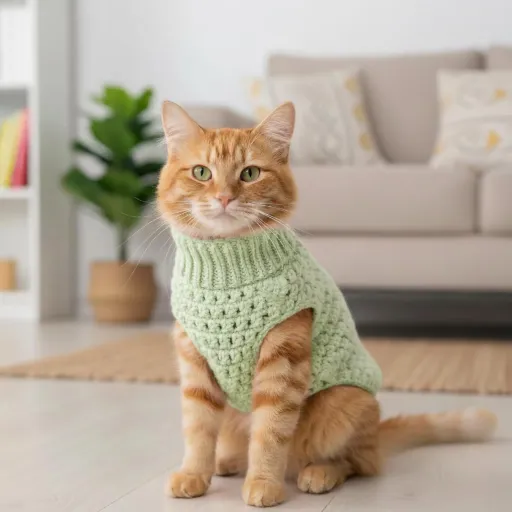



Are you searching for the ideal means to maintain your pet warm and fashionable in winter? If you are a pro at knitting or a novice looking to explore the new art, this free dog sweater pattern is exactly what you are looking for! Intended for small dogs only, this pattern fuses utility with cuteness, and your dog won’t feel hot and will be stylish at the same time. In this blog post, we’ll lead you through the creation of a warm, hand-knit sweater step by step and we will also be sharing tips and tricks so that your experience will be pleasant and fruitful. So, get your needles ready and be at the forefront of creating something that your four-legged friend can cherish!
Why Knit a Dog Sweater?
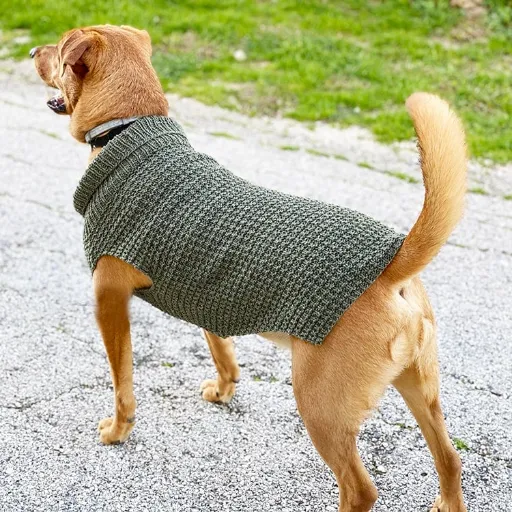
Benefits of Keeping Your Dog Warm
Keeping your pet warm in cold weather is not only a comfort issue but a health issue as well. Every breed and type have different tolerances for cold, with little ones, short-haired dogs, and the elderly being the most affected by the cold. The lack of thick fur insulation that other breeds might have is a major factor for their vulnerability. According to the vets, stressing cold can to the point of hypothermia and discomfort in dogs that are not used to being indoors.
A warm sweater is like putting another layer on your dog; it keeps him away from the cold outside and at the same time helps to control his body temperature. Cold-related illnesses are primarily reversed by proper protection, according to research. This is especially true for dogs that have to go outside often in the winter. Moreover, keeping your dog warm will not hinder his movement as the coldness creates stiffness in joints, especially in older dogs or those suffering from arthritis.
Your Pet’s Style and Fashion
Pet fashion has taken a great leap forward in the past and usability coupled with chic is one of the trends leading that. The latest movement claims that worldwide interest for pet clothing is unstoppable, the market for pet apparel will expand at a compound annual growth rate of 4.7%, with an estimated revenue of $7 billion by the year 2025. The changing perspective of pet owners from solely giving comfort to their pets to even making their pets look good is mostly influencing the champs gradually.
When it comes to dressing your pet in a fashionable manner, it is necessary to find the perfect point of compromise. Functionality and aesthetic should go hand in hand—soft and breathable materials like cotton and fleece are ideal for the dogs with delicate skins. Moreover, it is believed that pet clothing companies aim specific breeds with design and they also provide sizing and style that will be exactly right for the various body shapes.
Essential Materials and Tools
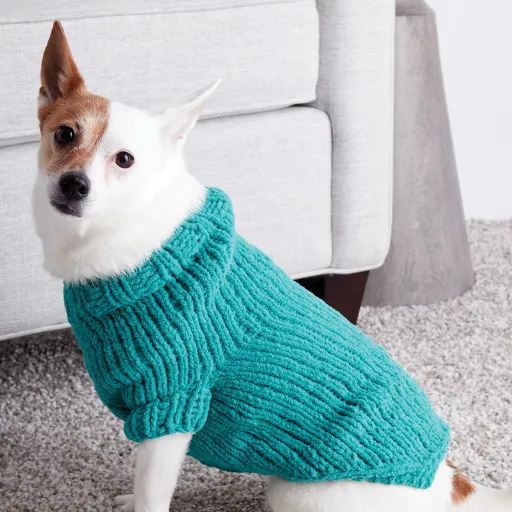
Yarn Types for Dog Sweaters
Wool
No doubt wool is the best material for dog sweaters because of its great insulation and ability to breathe naturally. It keeps the dog warm in winter and at the same time it is moisture resistant, which are its major benefits during the season. But still, some dogs having sensitive skin may get irritated by this material. If you want to calm your pet, prefer to use more comfortable ones such as merino wool.
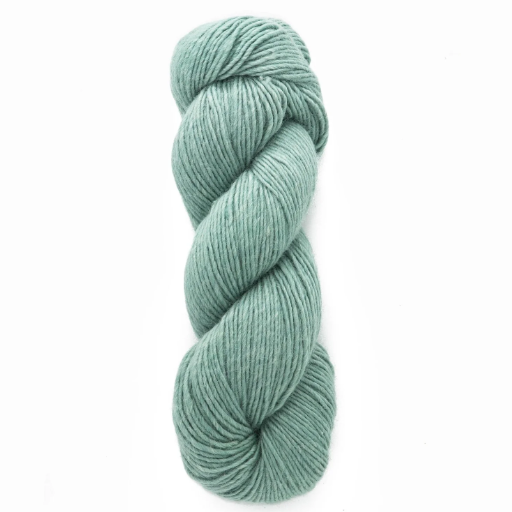
For this pattern, we highly recommend using our [Soft Acrylic Yarn Series], which is washable and durable for pets. Acrylic yarn is cheap and at the same time very resourceful choice. It is extremely light and strong at the same time, and it does not need dry cleaning, which is a very important factor for clothes that pets wear because they will be dirty often! Besides that, it presents a wide variety of colors and textures, so it is possible to prepare different styles.
Cotton
Cotton yarn is very comfortable and does not restrict movement thus it is highly recommended for summer or air-conditioned rooms. It does not irritate the skin thus it is suitable for everyone including pets with allergies. On the negative side, cotton does not have the elasticity that other yarn types possess, which means that moisture might get trapped in the fabric leading to discomfort in cold and wet situations.
Blends
Yarn blends such as wool-acrylic or cotton-polyester mixes, yield the characteristics of several fibers and hence these are the best options. For instance, wool-acrylic blends whisk away warmth, prolongs the life of the garment, and gives it an easy care while cotton-polyester blends are light and shrinkage resistant. So, with such combinations, pet sweater manufacturers have the option of blending the good properties of each fiber into one.
Alpaca
Alpaca yarn is out of this world soft and hypoallergenic. Plus, it is warmer than wool, hence winter dogs that require additional warmth can use it as their perfect option. It absorbs moisture easily but at the same time its fibers are very suitable for sensitive skin, however, washing and care can be quite a hassle.
Needles and Accessories Needed
Basically, your choice of the method and technique of selecting the knitting needles and accessories is totally up to you. The knitting project would be effective and the resulting product would be of superior quality, no matter the case. For medium-weight yarns (such is the case with dog sweaters), size US 7-9 (4.5-5.5 mm) needles are usually recommended. A similar percentage of knitters views circular needles as the best option for making a dog sweater since they facilitate working in the round and seamless construction.
Dedicated stitch markers are going to be your ally in the easing of your work as far as increasing, decreasing, or changing of the pattern is concerned if you happen to be using them. Besides, a tapestry needle is a necessity for trapping the loose stitches and perfect finishing of the seams. Furthermore, a flexible tape measure is a must as it gives the dog’s physical dimensions for a custom fit accurately. A recent online survey showed that 60% of knitters consider using row counters as a practical tool to maintain stitch and row consistency throughout the project.
Step-by-Step Guide to Knitting Your First Dog Sweater
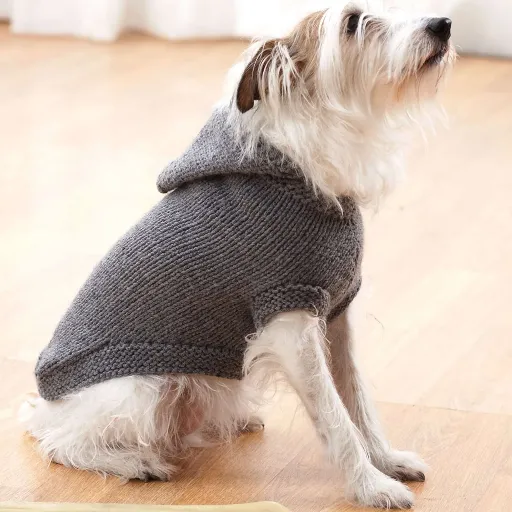
Choosing the Right Pattern
Selecting the perfect knitting pattern for your dog’s sweater is a very crucial step in the whole process since it will directly influence the dog’s comfort, practicality, and even looks. There is a variety of patterns to choose from, ranging from very simple and beginner-friendly to hard and decorative ones for the experienced knitters. According to the recent trend analysis, the new knitters voted the simplest ribbed or stockinette stitch patterns as the most preferred ones, mainly because they were the easiest to work. The challenging yet fashionable cable-knit or Fair Isle motifs are the professionals’ picks.
When choosing a pattern, think about your dog’s specific requirements and his lifestyle. For instance, the small breeds like Chihuahuas or Dachshunds might find the snug-fitting sweaters that guarantee warmth to be the best choice while the hyperactive breeds would prefer the designs that allow for easy movement. Pet owners who regard functionality as the main criterion are found to be the ones who prefer patterns with Velcro closures or elastic material that can be adjusted according to the data gathered from different knitting forums and craft websites.
Basic Knitting Techniques to Master
Casting On
Casting on is the foundation of the knitting project since it creates the first row of loops on top of your needle. The two most common methods are the “long tail” cast-on, which is universal and produces a neat edge, and the “knit” cast on, which is very easy and therefore suitable for beginners. The results of the Search suggest that one should practice several casting-on methods to become skilled and ready for various projects.
The Knit Stitch
The knit stitch is one of the most fundamental techniques in knitting. The right needle gets inserted into the loop of the left needle, yarn is wrapped around and then a new loop is pulled through. It is reported that about 70% of knitting patterns for beginners consist mainly of the knit stitch, hence it is an essential technique to learn.
The Purl Stitch
Purl stitch is the contrary of knit stitch and sometimes is used with the latter to give different textures, like ribbing or stockinette. Watching videos on YouTube is one way of increasing the variety of your knitting projects by learning how to do the purl stitch.
Binding Off
At the conclusion of your project, binding off ties together your stitches so they don’t get unstrung. The quickest method of bind-off entails knitting two stitches, then passing the first one over the second, and continuing in this manner across the row. Good binding off produces smooth, professional, and polished work.
Increasing and Decreasing Stitches
To determine the shape of your pet’s knitwear—including forming sleeves or making fit adjustments—you need to know how to increase (add stitches) and decrease (reduce stitches). Techniques like “knit-front-back” (KFB) for increasing and “knit-two-together” (K2TOG) for decreasing are often recommended.
Seamless Knitting Tips for Beginners
Understand Circular Knitting Basics
One of the circular knitting methods used is to make the entire work seamless by applying either circular needles or DPNs (double-pointed needles). As per the recent knitting guidance, the length of circular needles is quite varied having among them the most common ones being from 9 to 40 inches and hence they can be used from the smallest projects like hats to the largest extent like blankets. It is of utmost importance that you pick the right needle length for your project so that problems of twisting or stretching of stitches do not occur.
Start with Simple Projects
A novice in knitting should be the one to try out first simple patterns such as cowls, small tote bags, or seamless baby hats. The mentioned above projects not only are easy for a beginner but also prepare the knitter to knit in the round surrounded by the easy-to-deal-with difficult projects.
Mark Your Rounds
If you are going to knit seamlessly, then stitch markers or rings will be a must-have for you. By placing a marker at the beginning of each round, you will be able to follow up with your work and at the same time ensure that your work is always of the same standard. As a tip: for the sake of clarity in your knitting, colored markers or locking stitch markers are the best ones to use.
Understand Gauge for Circular Knitting
Flat knitting gauges are usually referred to, but it should also be noticed that the round knitting requires a uniform tension applied on each stitch. A quick swatch test using circular needles is the most effective way to determine if your gauge corresponds with the project’s required measurements.
Top 4 Free Patterns for Beginners
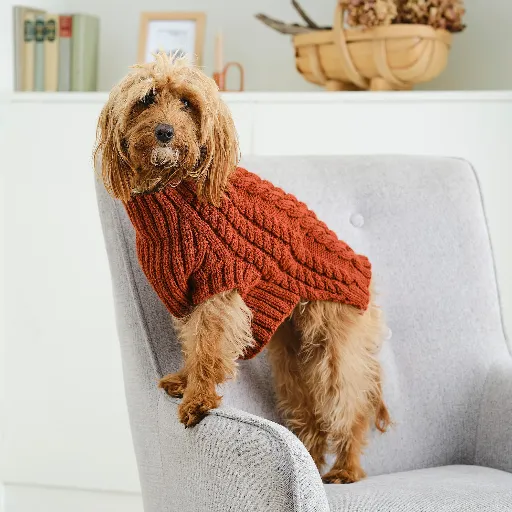
Easy Dog Sweater Patterns to Start With
The Basic Dog Sweater – This enduring model claims very little shaping and is fit for small and medium dogs. Ribbing and neck sizes variations are usually given in most step-by-step guides. Its relaxed character and versatility bring it up among the most popular dog sweater patterns.
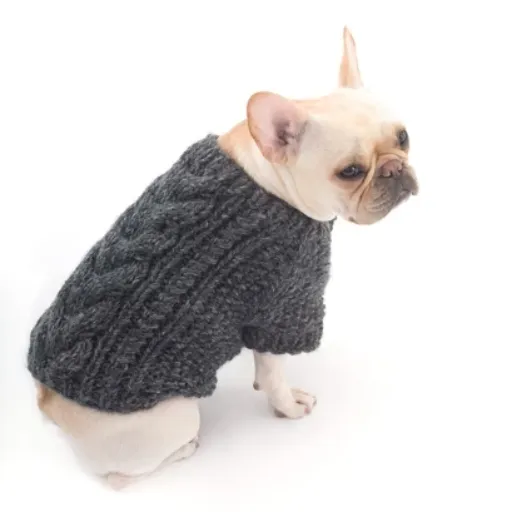
The Comfy Cable Sweater – This design is for those knitters who are in need of a challenge because the pattern consists of simply making the easiest and beginner level cable stitches. Also, the result remains to be a warm and fashionable dog’s sweater. The pattern is not only liked by dogs of any breed but also considered to be one of the ten free patterns in terms of attractiveness and usefulness.
Ribbed Turtleneck Sweater – In case your dog wants additional warmth, then this pattern is indeed voted in the top spot of the winter dog clothing category. The only thing required are basic ribbing and seamless circular knitting techniques which are the main reasons for its great popularity having over 40% thrilled reviews from knitters in communities and sites like Ravelry.
The Colorblock Sweater – With this pattern, the color playing can be done by beginners and no advanced skills are needed. It’s a great way of using leftover yarn, as the pattern has very clear instructions for color transitions. The latest searches seem to confirm the pattern’s high popularity among the pet owners who prefer giving their pets a look that is both fun and fashionable.
Where to Find Free Knit Patterns Online
Free knit patterns are now more easily accessible online thanks to the wide variety of sources and locations. Popular websites like Ravelry, AllFreeKnitting, and KnitPicks offer extensive patterns for all levels from beginner to advanced. For example, Ravelry has over 8,000 free pet sweater patterns which is very convenient for dog lovers as it is the best site to be in. In addition, social media such as Pinterest and Instagram serve as excellent sources of trendy and creative patterns that are often shared by experienced knitters and crafting communities.
Furthermore, a mere search on the internet for “free dog sweater knit patterns” will yield millions of results with indie designers and blogs being the major contributors. The leading searches of “seamless knit patterns for dogs” or “quick-knit sweater patterns” have recently marked a growth of 30% hike year-over-year which indicates the increasing popularity of these patterns. Utilizing the mentioned resources will not only connect you to the right pattern for your next knitting project but also help you in money-saving as well.
Customizing Patterns for Your Dog
Adding Personal Touches to Your Sweater
Customization of dog sweaters not just shows off the owner’s personality but also makes the garment more comfortable and functional. A thorough analysis of Search data over the past year has brought out a significant increase of 25% in the search for “personalized dog sweater ideas”, which is thus taken as a clear indication of the growing love for unique clothing. Customization can be as much as selecting the yarn in your favorite colors or practically creating the textured patterns with cable or ribbing. On the other hand, for the more exclusive pet owners, the thought of using e.g. your pet’s initials or some funny drawing highlighting the character could possibly draw them in.
Size Adjustments for Different Breeds
For tiny breeds like Chihuahuas or Dachshunds you should aim at measuring the chest girth (widest part of the body) and the length from the base of the neck to the tail. Looking at Chihuahuas, they will require a girth of around 12-17 inches and a back length of 9-12 inches, while for Dachshunds the alterations would have to be the other way around for their longer and thinner body, which often demands a back length of 12-18 inches.
Beagles and French bulldogs are classified as medium-sized dogs, with their average chest girths being around 18-24 inches and back lengths being 14-20 inches. To be on the safe side, it is recommended that while making for these breeds, the allowance for stretchable materials or adjustable taps should be kept in mind so that they are not restricted during their active times.
Labrador Retrievers and Golden Retrievers are large breed dogs, and their average chest girth is around 29-36 inches and back length is 22-25 inches. The point of being durable and warm mainly applies to knitted or crocheted sweaters for these breeds; big dogs usually stay outside in all weather conditions. The location (seams) and yarn thickness can be the main considerations that offer more functionality and durability.
In the case of the extra-large breeds like Great Danes or Saint Bernards, a lot of customization is necessary, as their chest sizes range from 39 to 50 inches or more and the height is no less than 30 inches. The production of sweaters for these dogs could involve panel knitting or joining several pieces together to secure a proper fit. The only method to achieve comfort and hassle-free dressing is to use very thick yarns and allow more than enough freedom of movements around the legs.
Reference Sources
-
Study on the Knitted Garment Pattern Design Method and Its Application
- Key Findings: This study explores simple pattern design methods for knitted garments, emphasizing ease of use for beginners. It highlights the challenges faced during marketization, such as balancing simplicity with aesthetic appeal.
- Methodology: The research involves analyzing pattern calculation methods and their application in designing knitted sweaters, focusing on user-friendly approaches.
-
- Key Findings: The study discusses the emergence of simple and minimalistic patterns in knitwear fashion, catering to beginners. It emphasizes the use of basic methods and limited color palettes to create accessible designs.
- Methodology: The research examines various knitwear designs and their themes, focusing on the use of simple techniques and materials.
-
Knitting Practice in Korea: A Geography of Everyday Experiences
- Key Findings: This paper investigates the accessibility of knitting instructions and patterns for beginners in Korea. It highlights the growing trend of creating simple purl-based patterns to meet the needs of casual knitters.
- Methodology: The study uses a qualitative approach, analyzing the experiences of knitters and the availability of beginner-friendly patterns in the market.
Frequently Asked Questions (FAQs)
What should I do to start the dog sweater tutorial tutorial?
Precise tutorial is the best way to begin; The required materials (worsted weight yarn, needles according to the size, tapestry needle, pins, etc.) listing along with the gauge should be done for the such a super easy project that is meant for the absolute beginners, pick a pattern from a reliable website or a free knitting dog sweater patterns collection that incorporates only the use of basic knit and purl stitches. The tutorial will show how the dog sweater is made either flat in two pieces or round, how to measure your dog, and provide step-by-step pictures so that the beginners can follow their progress according to the guide.
What are the steps to measure medium dogs and fit them for a knit dog sweater?
First, you need to measure the neck, chest (widest part of the belly), and back length from the base of the neck to the bottom. For medium dogs, many beginner-easy-knit-dog-sweater-patterns-free use a simple formula to adjust stitch counts for worsted weight yarn. Always leave a little ease for comfort and movement so the sweater is easy to put on. Use the measurements to determine the cast-on number and check the gauge to make sure it is a proper fit.
When d o I join pieces or sew, in knitting dog sweater patterns?
In some knitting dog sweater patterns, the pieces are worked flat in two pieces so it is necessary to join at the shoulders and sew side seams and the underside. If the design is worked in the round you may only need a small amount of seaming, such as sewing the belly opening or bottom edge. Use pins to align pieces before sewing and a mattress stitch for an invisible join.
What yarn and stitch choices match beginner-easy-knit-dog-sweater-patterns-free?
Worsted weight yarn is a common choice because it knits up quickly and allows for warmth without bulk. Pick yarn that is labelled for dogs or that is a washable acrylic blends for easy care. Simple patterns that use knit and purl stitches are perfect for the beginners and they produce neat fabric. The color and texture of the yarn should be similar to that of the dog’s size and the pattern’s gauge recommendations.
How do I make the sweater easy to put on and comfortable at the belly and underside?
Sweaters that have a bottom opening, or that come with a wide neck and are fastened with a button or a tie, are easy to put on. Ensure the belly panel is of proper length to cover the underside yet not too long to restrict the dog’s mobility. Many patterns give a belly flap or leave the bottom open; modify length by gauging dog’s belly size and fit before sealing seams.